

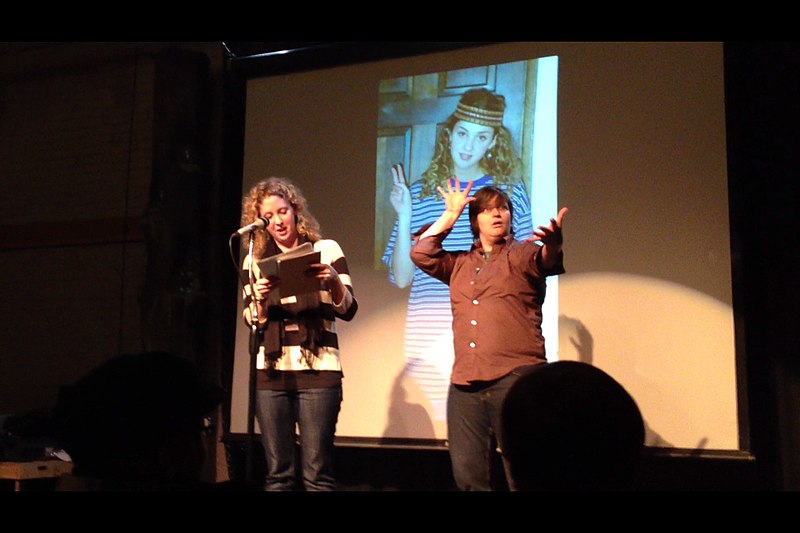
As theatres make accessible performances more of a priority, Priya Gupta speaks to a youth and community producer, an artistic director, and a theatre company founder about the importance of accessible theatre.
Birmingham’s vibrant arts and culture scene is home to many theatre groups supporting individuals with disabilities and access needs. But beyond making themselves wheelchair friendly, relaxed performances, and using British Sign Language and captioned shows, they face a challenge to make accessibility a priority.
An increasing number of people in the industry are speaking about the need for inclusivity in arts and culture.
And Artistic Director of Side-by-Side Theatre Company in Stourbridge, Susan Wallin MBE, says she has noticed a growing commitment from theatres — particularly the Birmingham Rep and the Royal Shakespeare Company — to make their productions more inclusive, with signed performances and actors with varying disabilities. “I think they are doing well,” she says.
One in four people
Around 16 million people — 24% of the population — had a disability in 2022 according to the Department for Work and Pensions.
Performance venues have a responsibility under the Disability Discrimination Act to make ‘reasonable adjustments’ for those with disabilities, including signed or captioned performances, induction loops and audio descriptions.
Founder of Alternative Voices Theatre Company Madeline Levy says:
“You never know when you may get a disability. For example, you may fall off your bike and shatter your spine, and suddenly you are disabled. You would want the same rights as you had before, right? That is why access is important: it promotes fairness and justice for all individuals no matter who they are or what they present with.”
And a 2022 report on theatre access by VocalEyes argued that access was “the only way deaf, disabled and neurodivergent people can engage, contribute and lead. Disabled theatre lovers aren’t missing, access to the theatre is.”
“Accessibility in my view is about the entire experience from start to finish,” says Madeline. “How easy was it to find parking outside the building? How easy was it to know where to go? Did the individuals feel welcomed in the space?
“Accessible performances are one thing but if you have accessibility at the heart of your experience then you can improve an experience for everyone not just those with disabilities.”
A work in progress
But accessibility in the arts remains a work in progress. Not all shows are adapted and created with access and disability needs in mind: at The Alexandra Theatre Birmingham, for example, only have a handful of shows were listed as accessible when Birmingham Eastside checked.
Susan Wallin MBE says there may be a number of reasons for this:
“Signing or captioning every performance may mean extra financial outlay. And some companies may feel that audiences could be distracted — I think it’s something they may need to do more research on. However, we went to see ‘Ben & Imo’ at the RSC on Saturday and the actor signing was on the stage, moving with the two characters, and we didn’t have any problem with that.
“I think theatre audiences are very accepting and understanding of the different needs of people being catered for.”
For Louise Betts, Youth and Community Producer for Travelling Light Theatre Company, thinking about accessibility makes the work richer, more interesting, and inclusive:
“It’s important to challenge the barriers you face to make work accessible and inclusive to a wider range of creatives and audiences. Some of these you can solve easily, others take more time and advocacy to change, but it is vital to keep this at the forefront of our minds when making and sharing work.
“Young disabled people need to see people like them making theatre, going to see theatre, being part of the creative community.”