

Lockdown made the life of more than every third child and young person between 11 and 22 years worse, a new survey from the NHS shows.
Those with a probable mental disorder felt greater effects of the lockdown on their life,
The survey was conducted this year during the lockdown among 3,570 children and young people.
Rates of probable mental disorders have increased since the last study in 2017.
In 2020, one in six children between five and 16 years have a mental disorder. In 2017, it was only one in ten.
In the West Midlands the mental health of one in five children and young people was affected by the lockdown. This is also what the NHS Birmingham and Solihull have been experiencing:
“Evidence suggests that COVID-19 has, and will continue to have, an impact on the mental health of local people in Birmingham and Solihull.
“The local NHS in Birmingham and Solihull is encouraging anyone who needs support with their mental health and wellbeing to seek help and not wait until they reach crisis point. There is free, confidential and flexible support available.”
As a response to the lockdown they have launched new services such as
- The Kooth service that provides free, safe and anonymous mental health support to young people.
- The CCG’s expanded mental health support service that provides a 24/7 telephone helpline that offers emotional help, guidance and reassurance to people of all ages and backgrounds, including key workers.
- The CCG’s new bereavement support offer helpline. The service offers support to anyone in Birmingham and Solihull who may be grieving the death of a friend or loved one or been exposed to death at work.
Lockdown made children and young people feel lonely
The lockdown made children and young people feel lonely more often, according to the NHS survey.
Almost half of children and young people between 11 and 22 years say they felt lonely at least occasionally or sometimes during the lockdown.
Those with a probable mental disorder were more likely to feel lonely. They were also more anxious about the pandemic.
Access to services
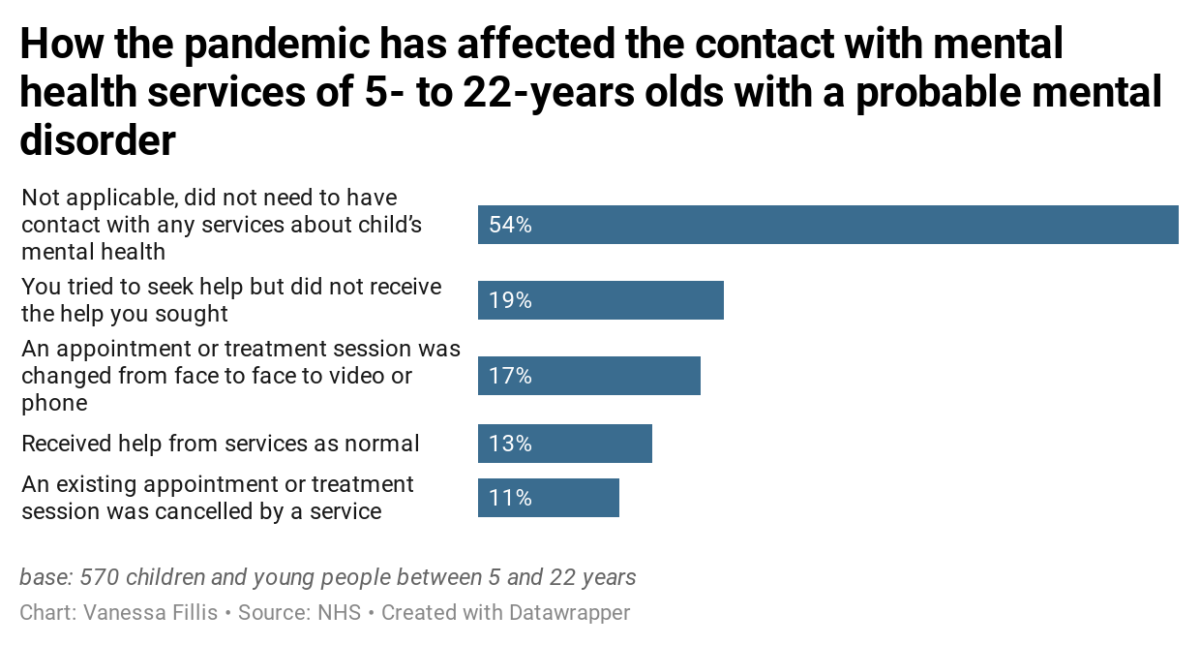
The lockdown has also affected contact with mental health services, the survey shows.
Only 13 percent of those with a probable mental disorder between 5 and 22 years received treatment as normal.
Almost one in five reached out to services – and did not receive the help they asked for.

With the possibility of Birmingham moving into Tier 3, the NHS Birmingham and Solihull are assuring that their services will be available throughout.
“In the event of Birmingham or Solihull moving into Tier 3 restrictions, our services will continue to be available. The CCG will carry on promoting these services and encourage local people to get help when they need it”, NHS Birmingham and Solihull say.