

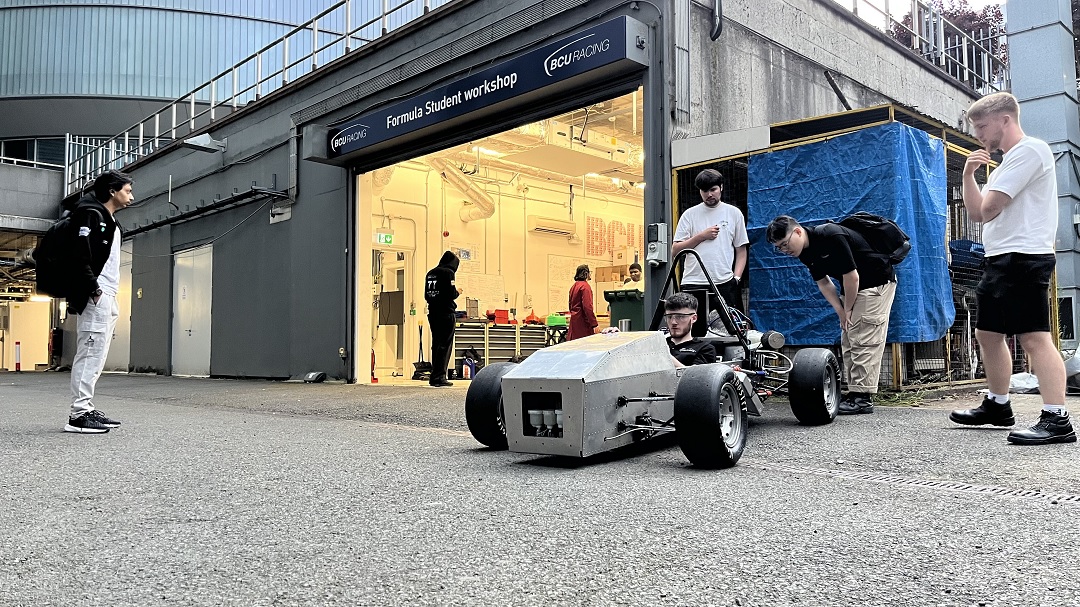
A broken chassis, a hard reset, and one last shot for some of the crew – BCU Racing fights to finish what they started at Formula Student 2025.
Streaks of silver and blue will light Silverstone this summer. It’s a given. Or at least, more certain than the British weather.
The mood at the Formula Student (FS) workshop behind Millennium Point is different. No, it’s not a false spring. The new campaign marks a turning point for Birmingham City University Racing Team (BCURT).
“The work is going to show,” Salim Sarham exudes confidence as he watches his crew meticulously construct a rhombus-shaped aluminium box. The team principal is determined to put away the group’s dismal 2024 Formula Student campaign in his rear-view mirror.
Flashback: Strong heart, brittle bones
In the build-up to the 2024 edition, the team overcame an engine issue. High-fives and fist bumps reverberated across the workshop as the young group of engineers celebrated the breakthrough.

However, their happiness was short-lived. The chassis, which acts as the skeleton of the car holding everything together, posed challenges, preventing BCURT from producing a fully functional prototype.
“It was a little bit disappointing,” recalls Ben Cooke, the Powertrains lead, who spent hours resuscitating the engine. “We’d put in a lot of effort. Unfortunately, we didn’t have a chassis.”
The team finished in the bottom half of the standings. The results didn’t reflect the full journey. However, Ben, who worked on the heart of the car, remained optimistic. He predicted the team would be ‘in a strong position’ for 2025.
Dealing with reality, focusing on reliability
As the new academic year rolled in, the team went back to the drawing board. Progress on the engine was not enough.
“We were brutally honest with ourselves and looked at what was attainable for us,” says Salim, tasked with leading BCURT in a new direction. The automotive engineering student’s influence has been vital to the development of the volunteer-led project.
“Our main goal this year is to get a working car to endurance,” he underlines. The endurance format is a long-distance and long-duration event, testing the reliability and consistency of the car and the driver.
“We’re not after performance, or saving weight, we just want to bring the team back to a place where it’s functioning,” he notes.
“Then we build on that from next year.”
It’s a simple plan – and a clever one. A running car would see the team coolly finish in the top 25, setting up a solid foundation for the future.
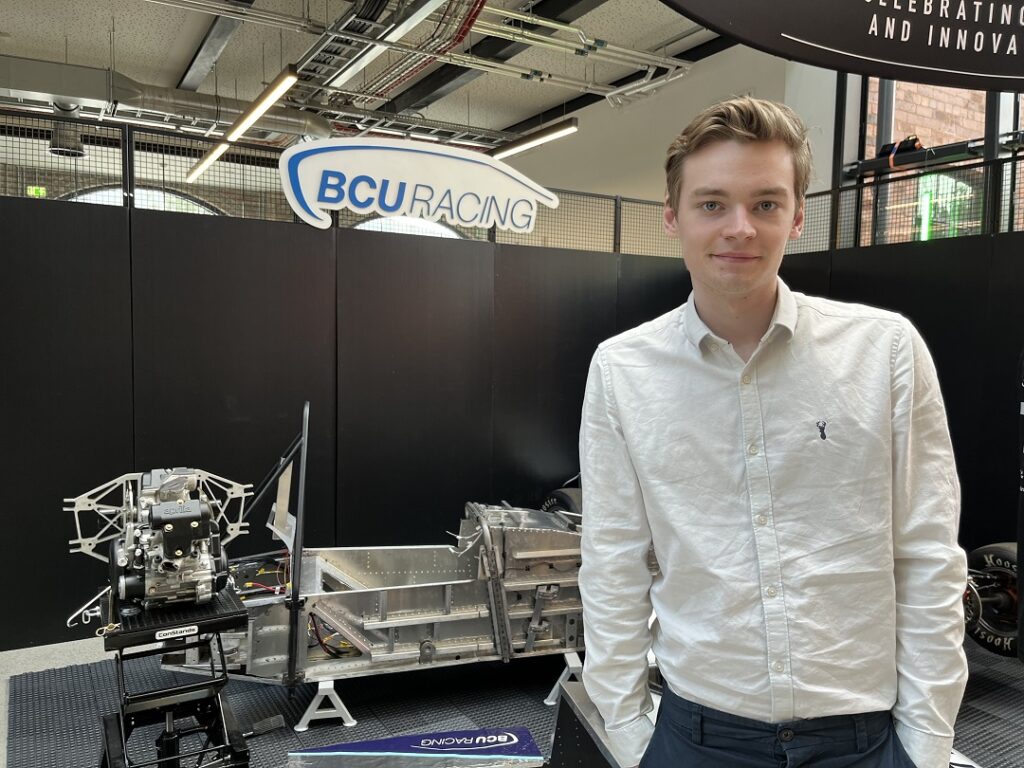
“Nobody really finishes endurance because nobody can build a reliable car,” adds Kyle Newton, from the Powertrains department. “We focused on reliability. So if we complete endurance, you’re pretty much guaranteed top 20-25, because that’s about how many cars actually finish it.”
The simple plan, however, requires a complex execution and the overcoming of a familiar speed bump.
For senior figures like Salim and Ben, this project means even more. This is their final year to deliver. The entire crew is racing against time, and the FS deadlines are being juggled with their academic year-end projects.
Lego is fun. Right?
Back in the workshop, metallic whirring pierces the quiet evening. Most students have gone home. But Harsha Penumadu and Peter Rhodes are riveting the chassis together, working overtime to build the car for Innovation Fest.
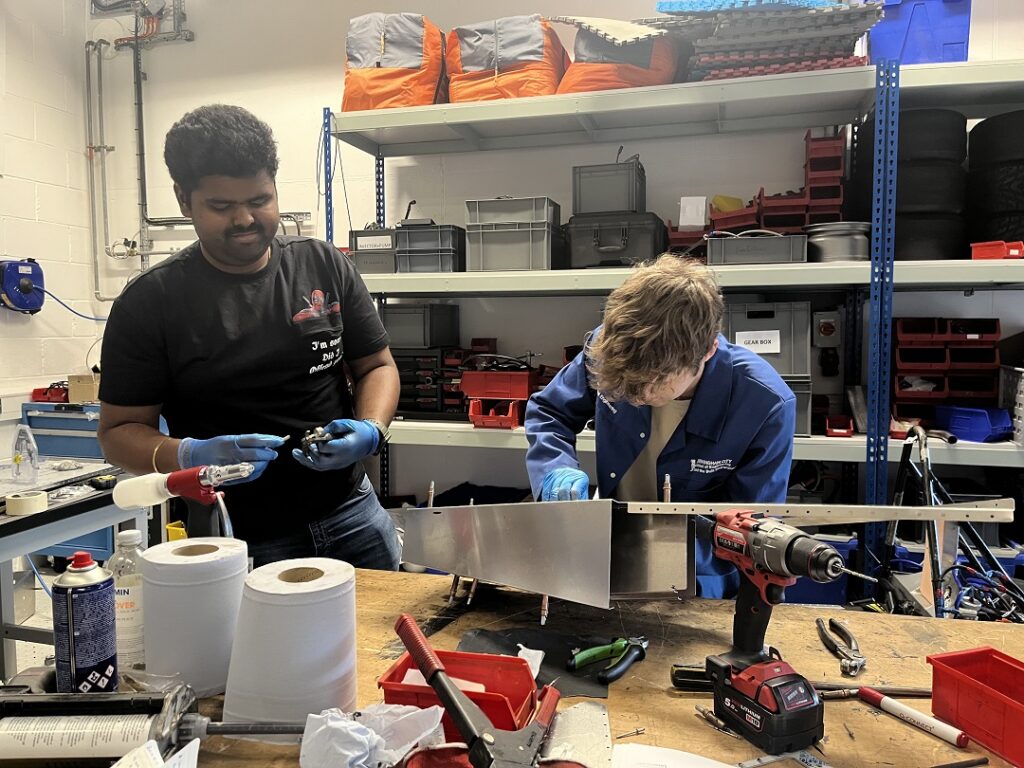
The team wants to ensure that they have a chassis built and ready to go to the event with ample time to spare.
Assembling the chassis is like ‘making a really expensive micro piece of Lego’, according to Harsha, the Technical Advisor of the team.
“Our build plan is pretty much a Lego assembly guide,” jokes Peter, Deputy Chassis Lead.
The process can involve installing over a thousand rivets, a component that permanently fastens two or more pieces of material, functioning similarly to a screw.
The frame can take weeks to build, and so much can go wrong. A small misalignment could lead to an expensive fix, both in terms of time and money. The main structural frame is first designed with a digital tool called Computer Aided Design (CAD). It is then manufactured into individual components.
“You don’t know how you’ve done until it’s practically in your hands,” chuckles Harsha. Then comes the difficult part – building it.
“It isn’t easy,” Harsha continues, a tense smile spreads across his face. “This is the most excruciating and painstaking work of the whole team.”
“The entire point of the chassis is that it has to fit the powertrain, the suspension, the controls, the electronics,” adds Peter. Without the skeleton, nothing else can be put together.
“The aim is to bring a chassis to Innovation Fest so that when it comes to testing, we can test the powertrain and the electronics in the test car to improve reliability,” continues Peter.
As over 1500 rivets hold firm the main structural frame of the car, BCURT’s 80-strong team have seamlessly worked together towards the vision set out.
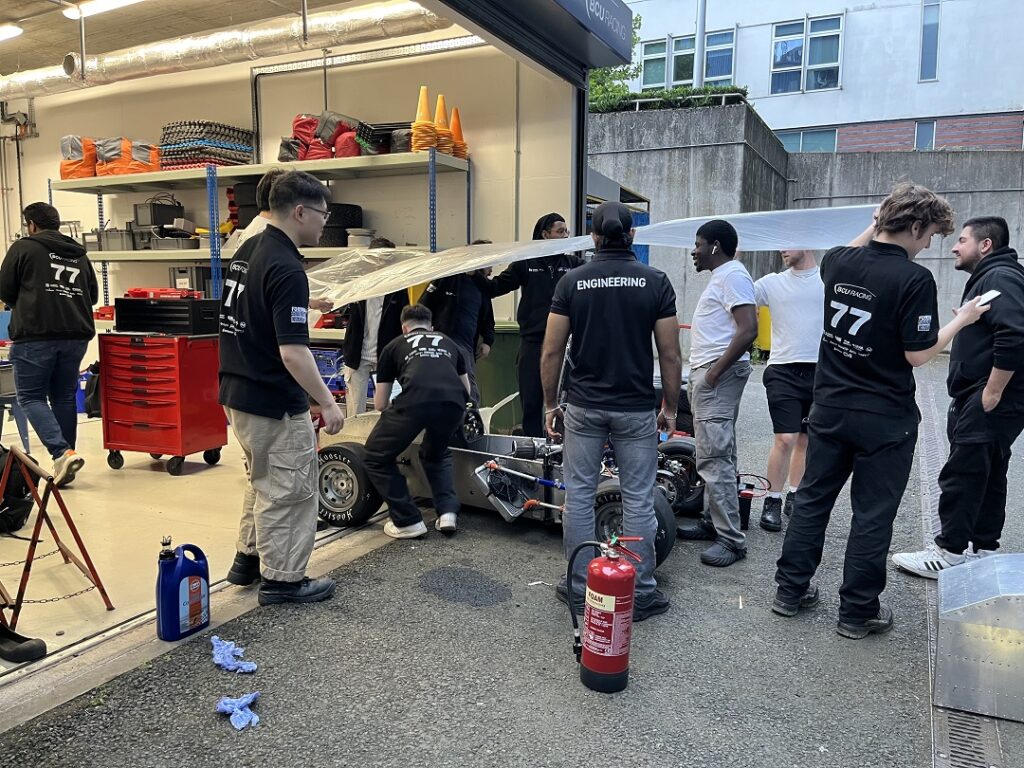
“We’re one unit now,” says Salim. “No one is trying to veer off in a different direction. Everyone is headed for the same goal.”
The university higher-ups are equally engaged in ensuring the team’s success. Laura Leyland, the Interim Head of the College of Engineering, organised security at the workshop so that the crew could work on the car untroubled during the weekend and non-operating hours.
“We’ve pretty much been working from 9am till 9pm, every day,” reveals Emad Soltani, the team’s Academic Advisor.
And the long hours have paid off. The team has overcome its biggest hurdle.
Emad stood a relieved man at the Innovation Fest on May 22 held at Birmingham City University’s STEAMhouse.
“The chassis is ready,” he smiles, donning a black BCU Racing T-shirt under the glass ceiling, revealing clear blue skies.
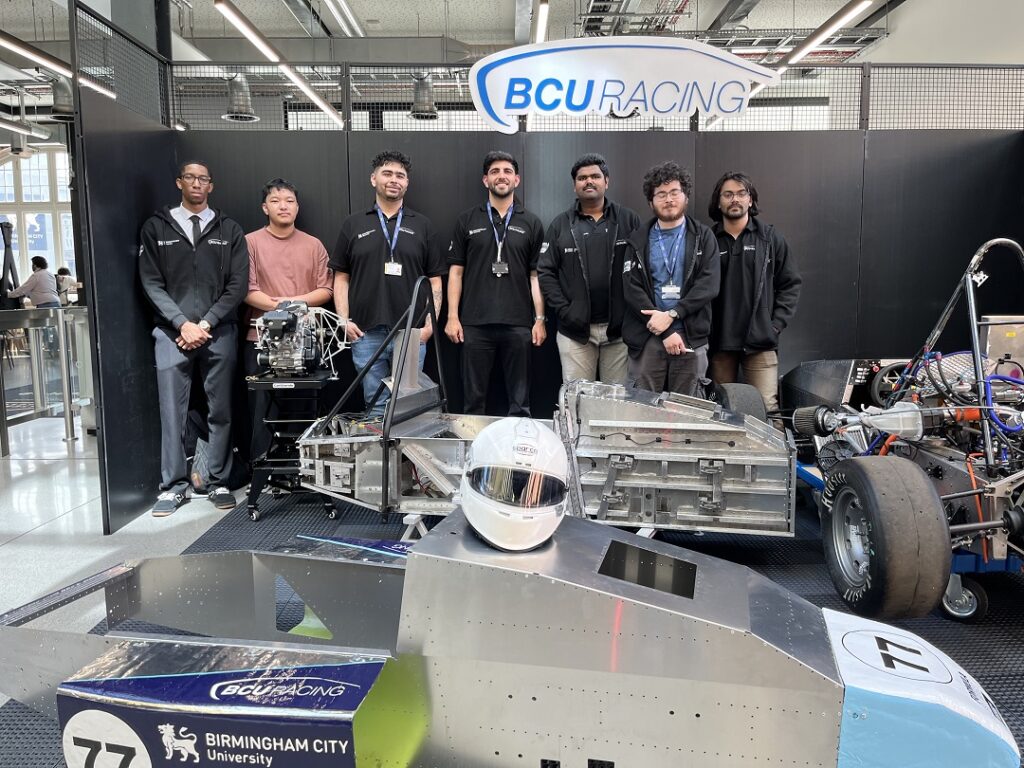
“Almost every year, you would be at that stage (building chassis) days before the event, whereas this year, we were about two months in and we’ve got 90% of the car ready.
“We’re on track!”
Silverstone ready
Birmingham City University Racing’s silver and blue livery sparkles under the sun on the tarmac at Bicester Motion, just 15 miles south of Silverstone.
The air is warm, and the engine barks with a raspy tone. Ben lifts the throttle down the straight, zooming past the crew – their smiles brighter than the hi-vis vests they sported. Once a Royal Air Force Bomber Station in World War II, the site has now seen BCURT’s dreams take flight.
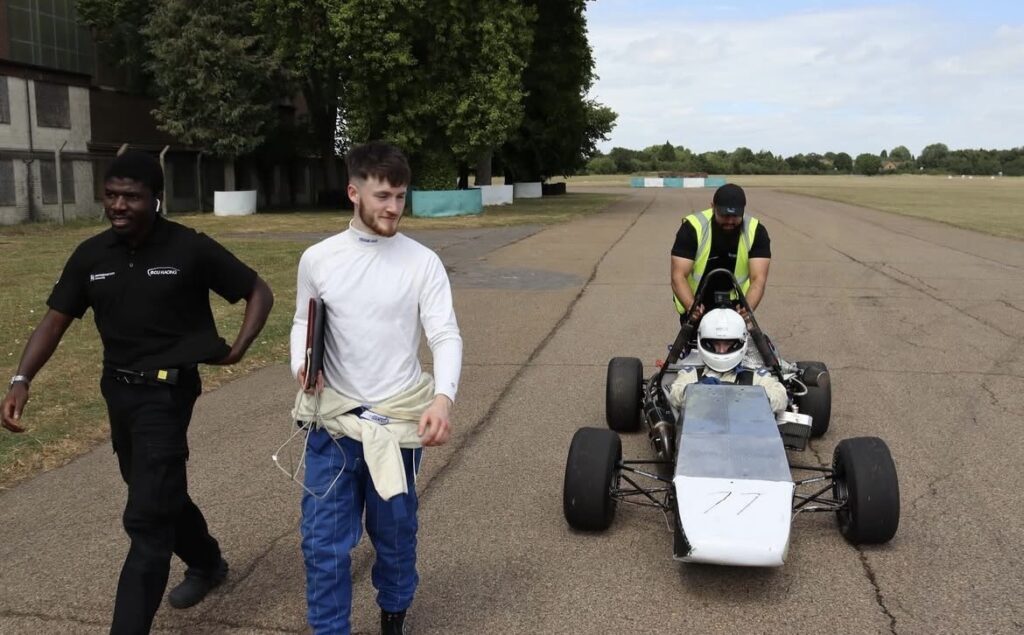
“Over the past two years, we’ve learned a lot,” says Harsha, who has been a mainstay of the team for several years. “We received so much feedback and criticism.
“A lot of blood, sweat, and tears have gone into this project. Everyone’s really excited to be a part of this year because we are seeing results. This year looks promising.”
The technical advisor chuckles, quoting Mission Impossible: “Trust us one last time!”
And they have delivered – with a car, a team, and a future, all finally in motion.
BCURT will head to Silverstone from 16-20 July to compete in Formula Student 2025, taking on some of the best young engineers, top universities, and their finely tuned machines.